Analysis
33 articlesLong-form analysis of markets, technology, and the forces that move capital.
The Strait That Moved Your Whole Portfolio
The Nasdaq had its best day since March on Monday, the Dow hit a record, and everyone credited the U.S.-Iran peace deal. That's half the story. The real engine was one number: a barrel of oil falling from over $100 back to $80. For four months the single biggest force on your portfolio and your gas tank wasn't the Fed or AI — it was a shipping lane 21 miles wide at its narrowest. It just reopened, and that tells you everything about what kind of inflation we actually had.
SpaceX Isn't a Rocket Company
SpaceX just pulled off the biggest IPO in history — $75 billion raised, valued past $2 trillion on day one, worth more than Tesla. Everyone called it a rocket company. It isn't. Strip the filing apart and the money comes from one place: Starlink, a satellite internet utility that booked $11.4 billion in revenue and a 39% operating margin while the rockets lost money. The real story isn't the launch business. It's that private capital built a global internet grid no government could, and the market just put a telecom price on a thing that flies.
Inflation Hit 4.2%. Look at Your Gas Tank.
May inflation came in at 4.2%, the highest in three years, and the headlines called it a crisis. Strip out one thing — energy — and the picture flips. Core inflation rose just 0.2% on the month, below what economists expected, with shelter cooling and food flat. The 4.2% isn't the dollar breaking down across the economy. It's the Strait of Hormuz priced into your gas tank. The real danger isn't the number. It's a Fed that mistakes a supply shock for a demand problem and hikes into it.
The Market Fell Because Jobs Rose
The US economy added 172,000 jobs in May — more than double what Wall Street expected. Then the Nasdaq fell 4.18% and roughly a trillion dollars in market value vanished. Good news became bad news because Wall Street wasn't betting on the economy. It was betting on rate cuts. A strong labor market killed the cut, the bond market repriced in real time, and the most rate-sensitive trade on earth — AI semiconductors — got hit first and hardest.
Even Google Had To Ask
For 21 years Alphabet never had to sell new stock. This week it sold $84.75 billion of it. Berkshire's first major AI bet — $10 billion — anchored the deal. The stock fell 3.9%. The smart-money read isn't that Google is in trouble. It's that the AI capex curve has bent past any single company's free cash flow, and the free market is doing what it always does: routing capital to whoever can deploy it best.
Nvidia Owns Both Sides Of The PC
Six months ago Nvidia paid $5 billion for 4.4% of Intel. Yesterday Jensen Huang stood on a Taipei stage and unveiled the Arm chip that's going to eat Intel's PC business. Intel dropped 6%. AMD dropped 5%. Nvidia gained 4%. There's no contradiction. The free market just figured out Nvidia is the house — and it gets paid no matter which side of the table the chip is on.
The IPO With One Zip Code
Cerebras opened Thursday at $350. It hit $385 before NASDAQ paused it. By Friday afternoon it was $279. Somewhere in those numbers is a $95 billion bet that an AI chip company can survive on 86% revenue from one Gulf state — and a $237M 'net profit' that turns into a $76M loss the moment you strip out the accounting magic.
Xi's Shopping List
Trump landed in Beijing yesterday. By this afternoon, Xi Jinping had offered to buy up to 600 Boeing jets, 25 million tons of US soybeans a year, more American oil and LNG, and agreed the Strait of Hormuz must stay open. The story isn't who flew where. It's who was the buyer.
Inflation Is a Choice
April CPI came in at 3.8% this morning — the highest since May 2023. At 11:30, the Senate will vote to put Kevin Warsh on the Fed Board, with the Chair vote to follow this week. Powell leaves Friday. Warsh's diagnosis of what went wrong is not the one markets are pricing.
TrumpIRA: $1,000 a Year, No Employer Required
Forty-two percent of American workers have no retirement savings — not because they spent it, but because their employers never offered a plan. Today's executive order creates TrumpIRA.gov and attaches a federal match of up to $1,000 a year to anyone who opens one.
Who Pays for the Brain
The five biggest tech companies committed over $600 billion to AI data centers. The electricity bill is landing on the doorsteps of people who have never used an AI product — and the numbers are now documented, state by state.
Before Monday
Three things will hit the market at 9:30 Monday morning. Any one of them would be enough to set the week's tone. This week, all three arrive at once.
The Comeback Nobody Believed
Two years ago Intel was a cautionary tale. Revenue falling. Chips delayed. A 60% stock drop in a single year. Today it reported earnings that beat Wall Street's forecast by 2,800%. The stock is up 20% tonight and more than 150% from its lows. Here is the whole story.
The Man Who Built Your iPhone Is Now Running Apple
Every major player in the AI race is building a model. Apple is building the chip that runs them all — and today handed that chip, and the company around it, to the man who built it.

The Seat Is Empty
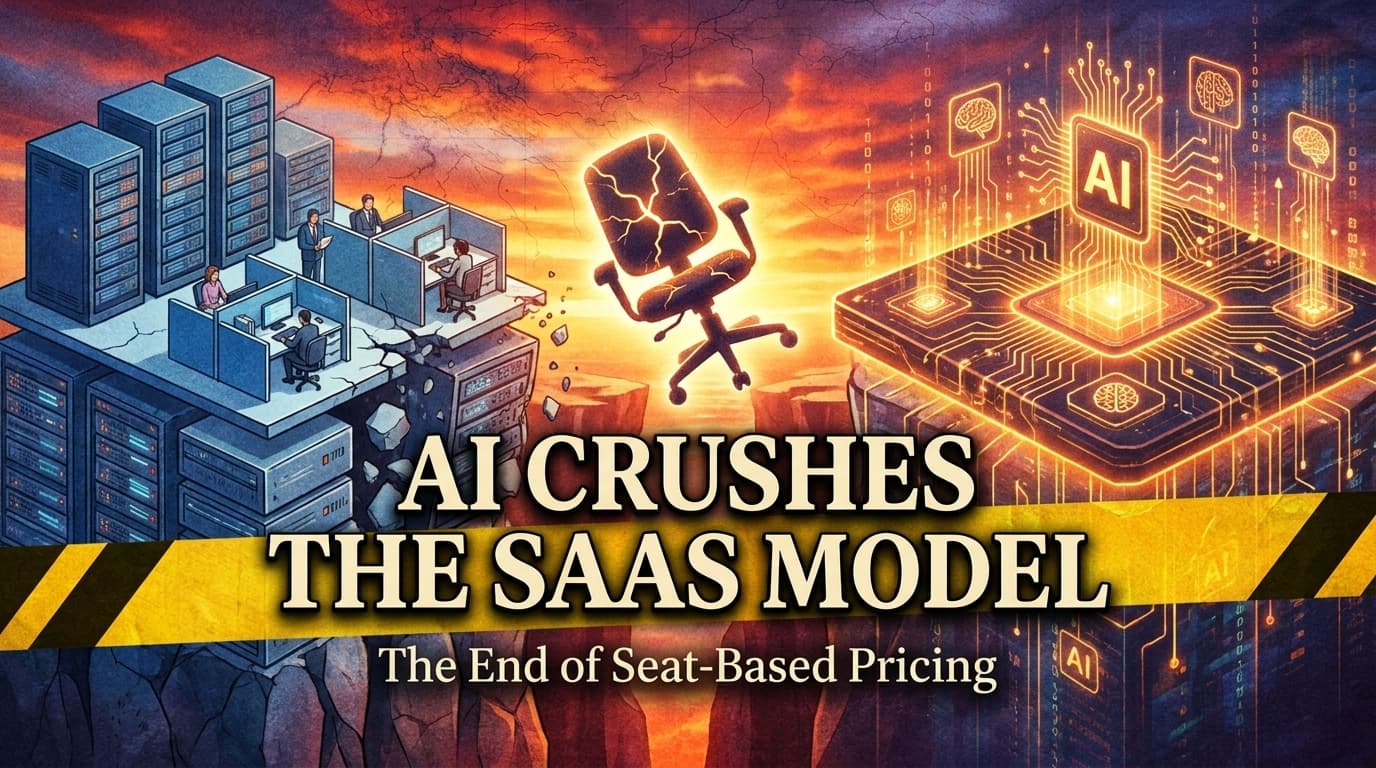
Salesforce's committed future revenue is $72 billion. ServiceNow subscriptions grew 21% last quarter. These businesses are fine. Their stocks are down 25–37% this year. The market has already made a bet about how this ends. Here is whether it is right.
Sold Out
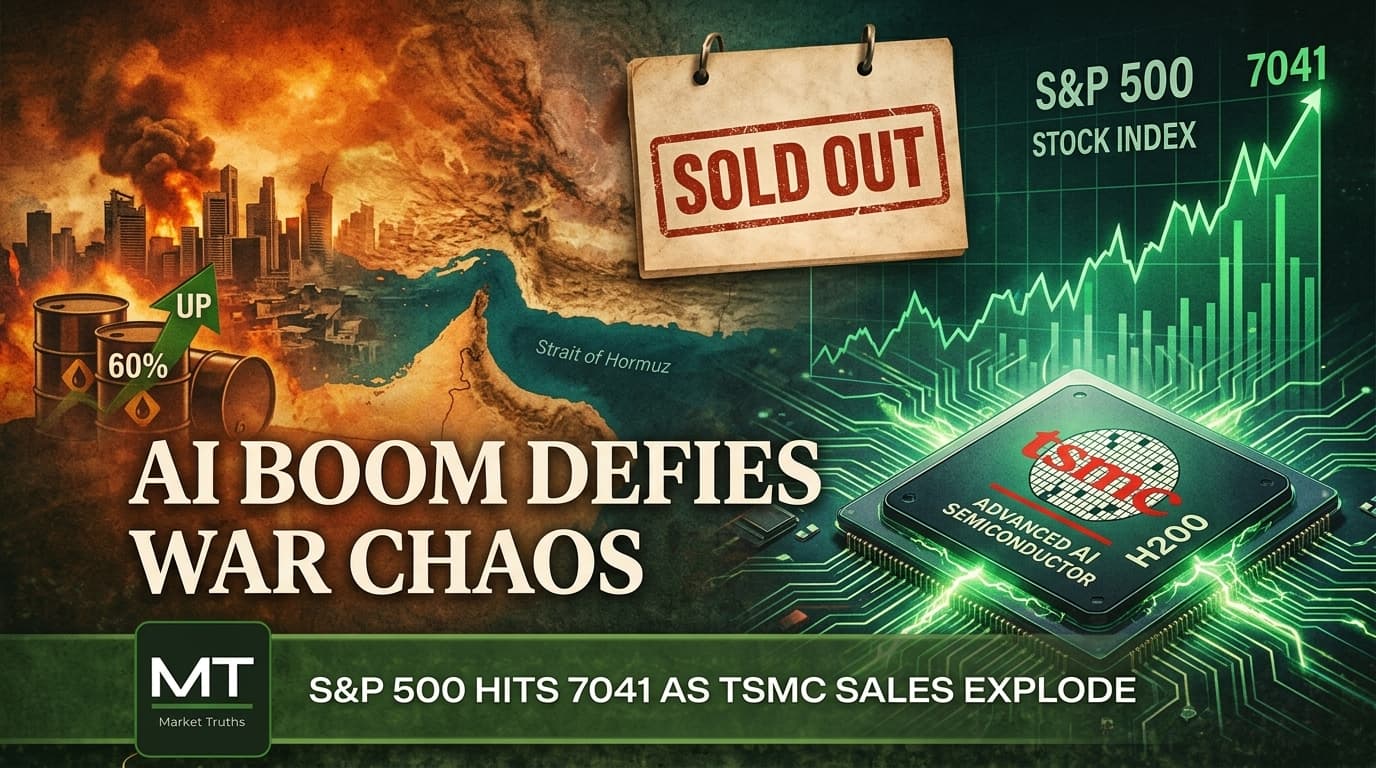
The Iran war pushed oil up 60%, froze the Fed, and forced the IMF to cut its global growth forecast. TSMC just reported its eighth consecutive quarter of double-digit profit growth — up 58% year over year. The war couldn't touch it. The reason is the same reason the S&P 500 hit a new all-time high today.
Born a Capitalist
America's 401(k) system starts when you get your first job at 22. Trump Accounts start the day you are born. That 22-year head start — compounding in the S&P 500 — is the most consequential financial policy change for American families in a generation.
The Tool That Maps the Threat
OpenAI published four reports documenting how the CCP uses ChatGPT against America. On Thursday, Florida's AG opened an investigation into whether OpenAI's own data is flowing back toward the CCP. Same company. Opposite direction. That question is now landing in the IPO prospectus.

The Most Dangerous Arbitrage
Beijing supplied Iran's defense, brokered the ceasefire, and put its tankers first in line when Hormuz reopened. That is not the story of a winner. It is the story of a player who made an enormous bet — and now has to collect.

They Told You It Was a Fantasy
In January 2024, the Biden administration paused US LNG export approvals — to protect the environment. In April 2026, Japan, South Korea, and Germany are racing to sign 20-year supply contracts with American producers. Every molecule Biden tried to stop is now the most valuable molecule on earth.
April 28
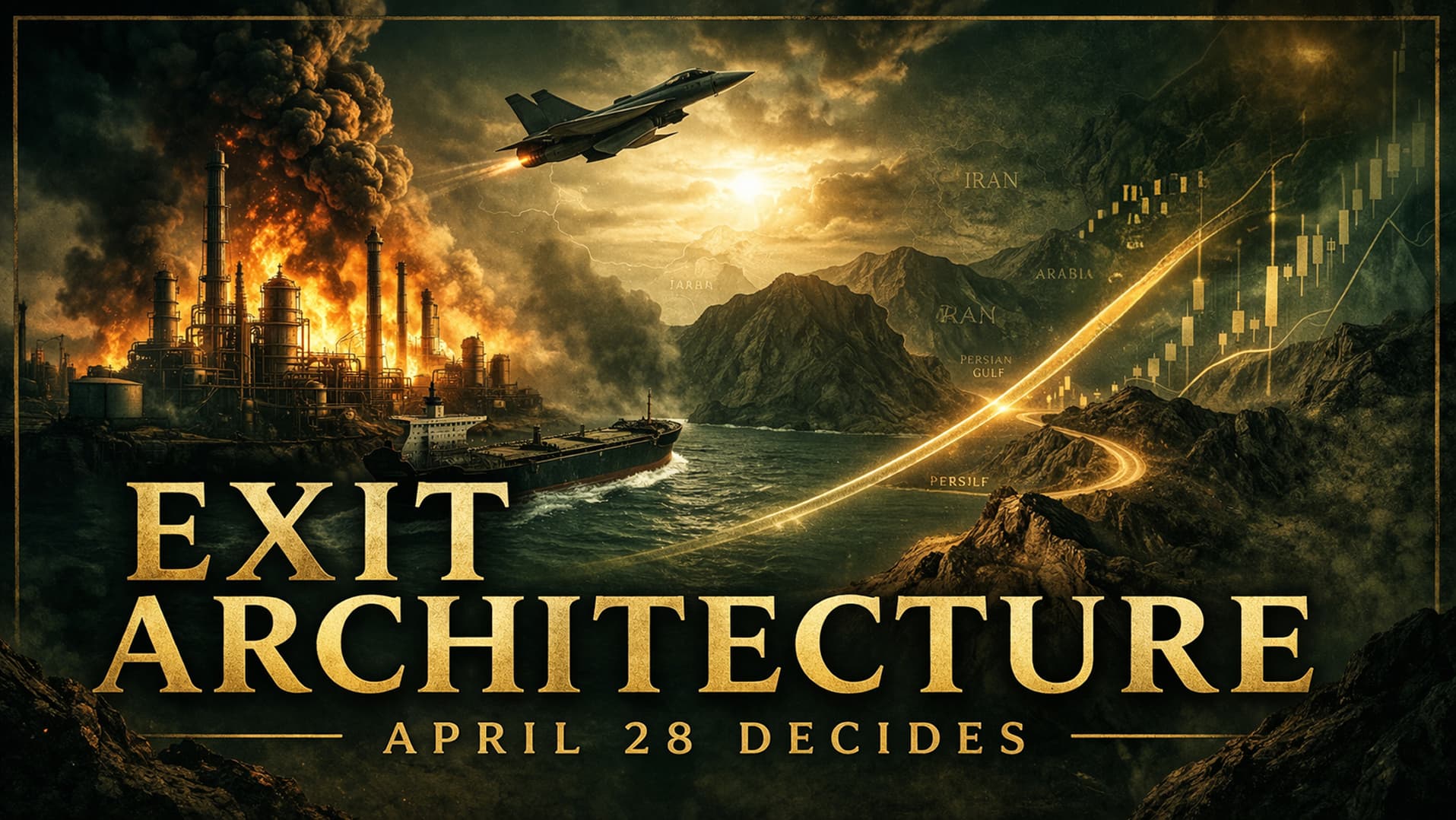
Two US planes down. Kuwait's refinery hit. Brent at a 15-year high. The news says escalation. Three structural facts — a legal clock, a decapitated command, a deliberate oil ceiling — say the exit was already built. April 28 is when you find out if it held.
A War With an Exit
The S&P 500 had its best day since May 2025 — not because Iran agreed to peace, but because Washington signaled a campaign with a boundary, not a blank check. This is the market repricing something it has not seen in decades: a war with limits, a strategy with an endpoint.
The People Who Built the Toll Road Just Left
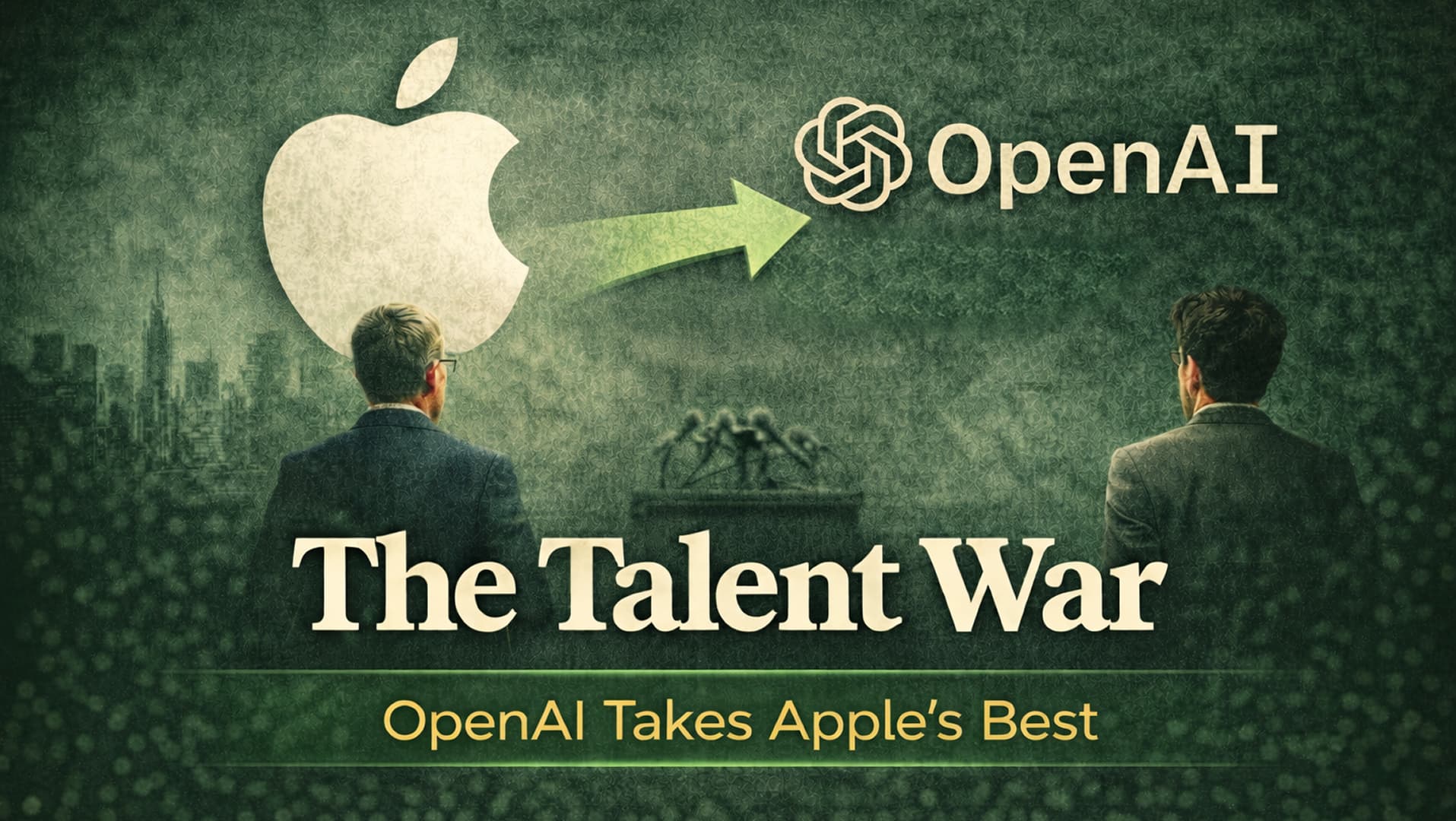
Apple paid $200–400K retention bonuses to iPhone designers this week to stop an exodus to OpenAI. The man who designed the iPhone is now using $6.5 billion of OpenAI's money to design its successor. The talent war — not the capex war — is the signal that actually matters for Apple's AI strategy.
The Toll Road
While Amazon, Microsoft, Google, and Meta collectively spend $700 billion on AI infrastructure in 2026, Apple is spending $14 billion — and the market is saying Apple is right. The reason: foundation models are commoditizing, and the scarce asset is the distribution layer Apple has spent 30 years building.
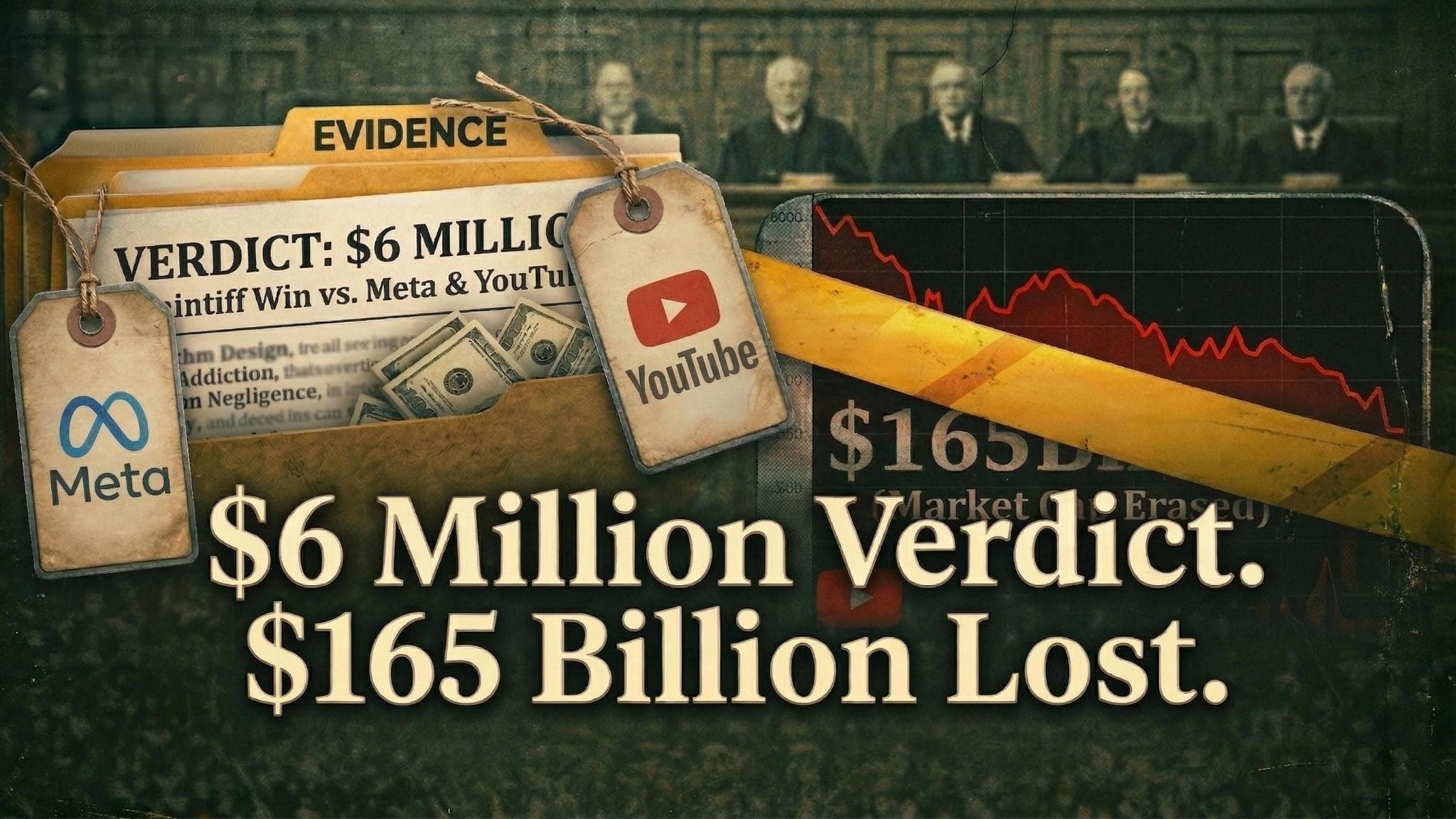
$6 Million Verdict. $165 Billion Lost. Here's the Math.
The verdict number is the smallest thing about this story. A Los Angeles jury awarded $6 million — eleven minutes of Meta's revenue. The market erased $165 billion. Four things the headline didn't tell you add up to the most consequential corporate accountability moment since tobacco.
They Knew
Section 230 held. The jury ruled against Meta and YouTube anyway. A Los Angeles jury found both companies liable for malice, oppression, and fraud — triggering punitive damages calculated against $632 billion in combined stockholder equity. This is the tobacco moment for Big Tech.
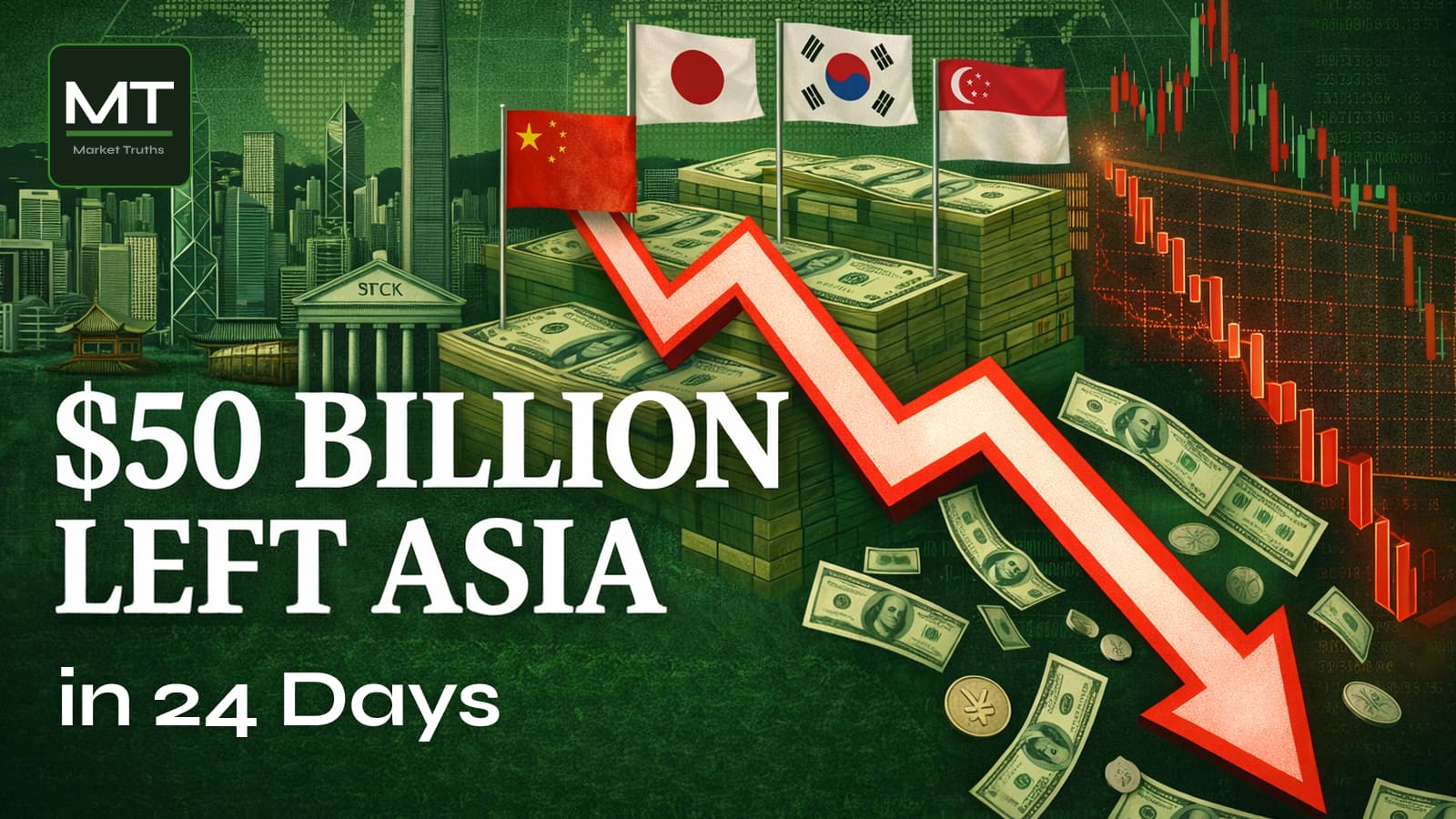
$50 Billion Left Asia in 24 Days
Foreign investors pulled $50.45 billion from Asian equities in March — the largest outflow since 2008. The market is repricing energy dependence as a capital risk.
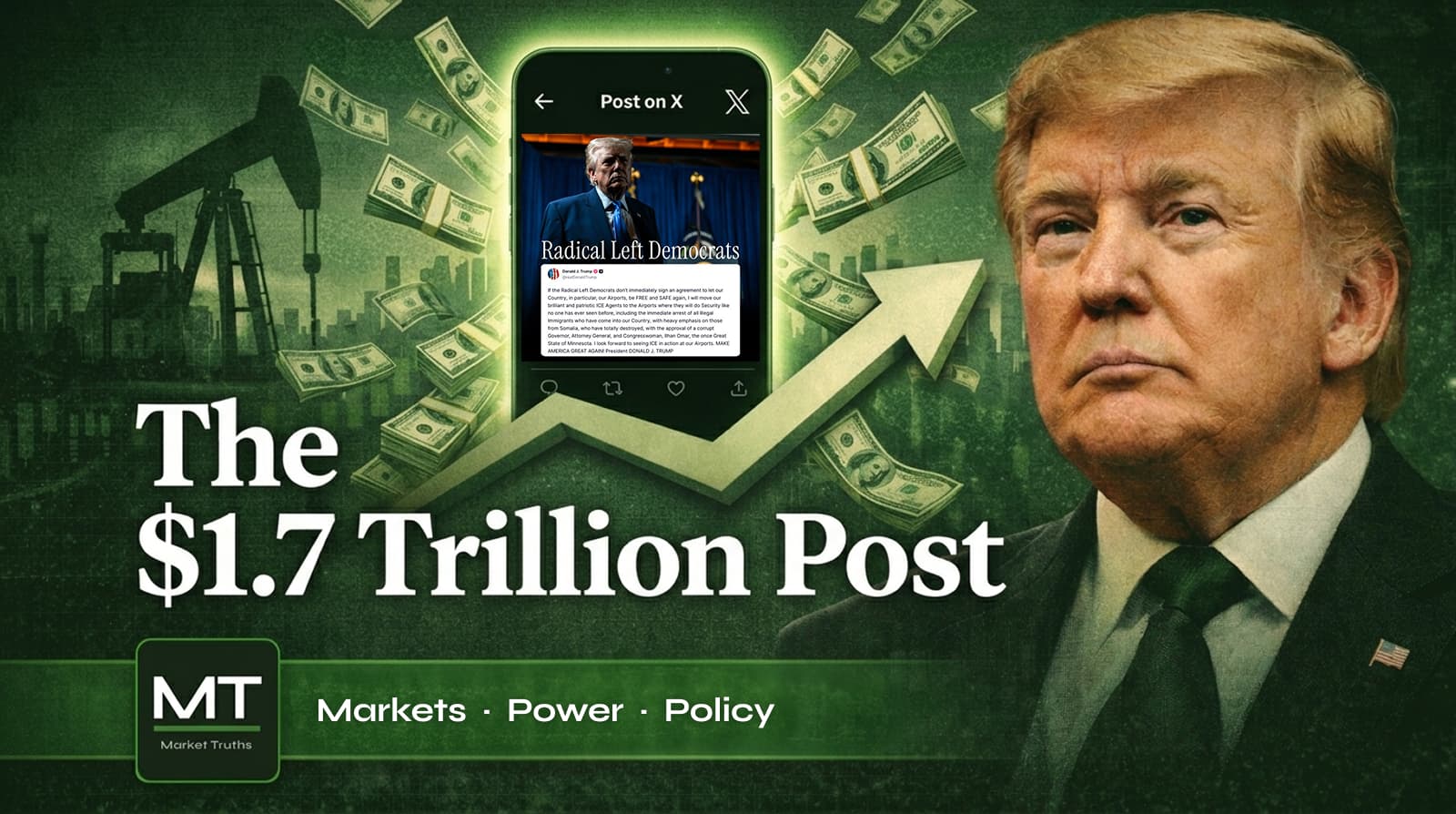
The $1.7 Trillion Post
Iran said there were no talks. Oil dropped 14% anyway. Markets are trading on who controls the exit — and American energy is positioned whether the exit opens or not.
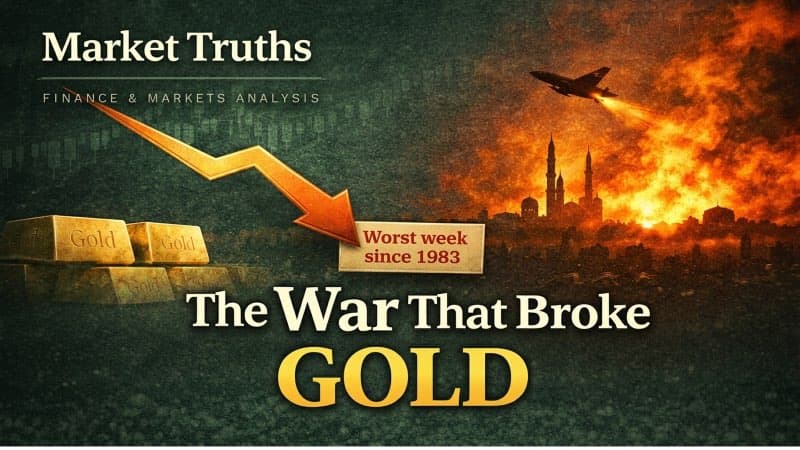
The War That Broke Gold
Gold just had its worst week since 1983 — down 11% — while oil hit $112 and the Middle East burned. That is not a contradiction. The war killed the rate-cut thesis that had been driving gold for two years. The Fed is trapped. And the market is pricing exactly who wins when physical supply is the constraint.
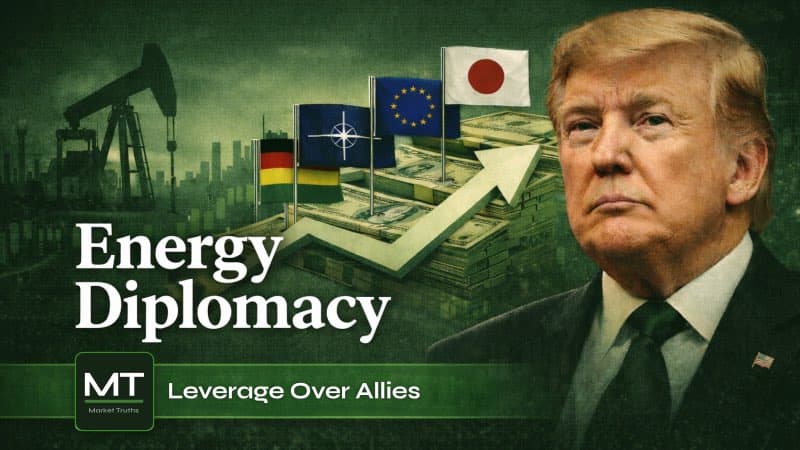
The Leverage Machine: How Trump Is Converting Energy Insecurity Into Alliance Currency
Trump did not create an energy security strategy. He created an energy dependency strategy. The South Pars threat, the NATO shaming, and today's Takaichi summit are one coordinated argument made in three currencies. Markets are pricing the leverage. That does not expire when the Iran conflict ends.
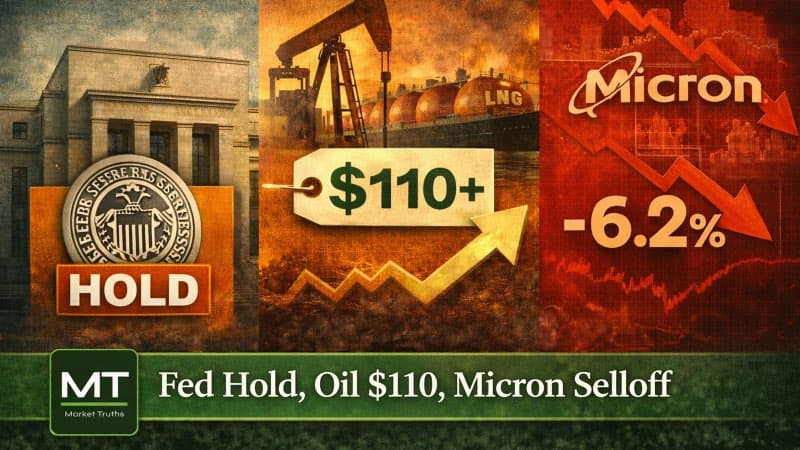
Rate Cuts Won't Fix a War. Neither Will Waiting for Qatar.
Three disconnects in one session: the Fed held as PPI printed at double the forecast, Brent briefly touched $119 after Iran struck Qatar's Ras Laffan, and Micron tripled revenue then fell 4.7% after hours. Each price move carried a signal. Each was misread.
Trump Plays the Long Game: Why Postponing the Xi Summit Is a Power Move for Markets and American Energy
Trump confirmed Tuesday he is postponing the Beijing summit with Xi Jinping by five to six weeks. The mainstream media calls it a scheduling disruption. The real story: Trump is negotiating from strength — using Hormuz, tariffs, and AI chip controls as simultaneous leverage while American energy producers dominate the global supply gap. Beijing is scrambling, not waiting comfortably.
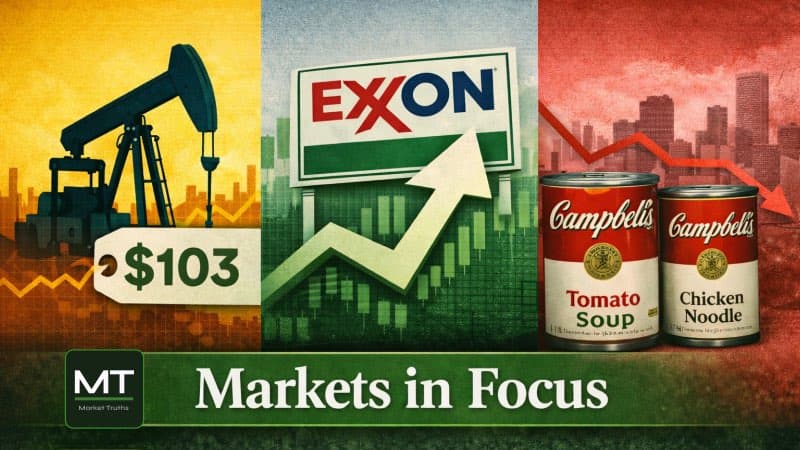
Oil at $103, Exxon at All-Time High, Campbell's Losing Ground: What the Markets Are Really Saying
Brent crude settled at $103.14 this week — its highest since August 2022 — as the IEA released 400 million barrels of emergency reserves and Exxon hit a $643 billion all-time high. Campbell's snack sales fell 6%, its stock dropped 16% for the week. The safe-haven rotation is broken: energy and defense outperform while consumer staples get punished.